
For many people, the idea starts with wanting somewhere to swim at home, but the natural swimming pond lifestyle isn’t just about having a place to swim. It’s about what happens to your garden, your routine, and the way you spend time outside when you build something that works with nature rather than against it. This guide covers the honest reality of owning one, from what you’ll actually do day to day to what changes in ways you might not expect.
A Garden That Works All Year Round
One of the things that surprises people most about owning a natural swimming pond is how much it changes the garden in every season, not just summer.
In spring, the marginal plants start to establish and the pond comes back to life. Frogs return. Birds begin using the water’s edge. The regeneration zone fills out with new growth. By the time summer arrives the pond is already working as a fully functioning ecosystem, with clear water and established planting that makes it look like it’s always been there.
In autumn the character of the garden shifts again. The planted areas begin to change colour, leaves fall, and the pond takes on a quieter atmosphere that’s just as appealing as it is in the height of summer. Wildlife continues to use it long after the swimming season has wound down.
In winter it becomes something else entirely. One of our clients swims in theirs every day throughout the colder months, breaking ice to get in when needed. He describes it as genuinely good for mental health, and credits the discipline of cold water immersion with being one of the most valuable parts of owning the pond.
And it’s not just about swimming. The same client talks about sitting beside the pond in the evening watching the light reflect off the water, or swifts coming down to drink. Those are the moments that don’t feature in a brochure but tend to be the ones people mention most when you ask what owning a natural swimming pond is actually like.
He also noted that in hot weather, with the pond positioned correctly and a good flow of air through the property, it helped cool the house naturally without air conditioning. It’s specific to his setup and how the site was designed, but it’s the kind of detail that comes from living with a pond rather than just reading about one. Watch the video below to find out more about his “eden”.
Swimming Without Chemicals
Most people who’ve swum in a chlorinated pool are familiar with what comes with it: the smell, the effect on skin and eyes, and the slightly artificial feeling of the water. A natural swimming pond is the opposite of that.
The water’s kept clean through biological filtration, beneficial bacteria, aquatic plants, and beneficial microorganisms that work together to absorb nutrients and prevent algae from taking hold. There’s no chlorine, no chemical treatment, and no harsh intervention. The result is chemical free water that’s genuinely pleasant to swim in, soft on skin, and clear enough to see through properly.
Trust us, it’s not magic, it’s just proper design. The filtration system, the regeneration zone, the planted zones, and the water flow all need to be right from the start. But when they are, the water stays clean and clear naturally, without large amounts of chemicals being added on a regular basis.
What the Day-to-Day Actually Looks Like
This is the question most people want answered honestly: how much work is it?
The short answer is less than you’d expect, but it’s not zero. A well-designed natural swimming pond is low maintenance by design, but it does have a seasonal rhythm that’s worth understanding before you build one.
| Season | Main Tasks | Effort Level |
| Spring | Cut back dead plant material, check filtration system and pump are running correctly after winter | Low |
| Summer | Monitor water quality, remove surface debris, check pump and water flow are consistent | Minimal |
| Autumn | Net the pond surface during heavy leaf fall to prevent leaves decomposing and feeding algae | Low |
| Winter | Keep an eye on things, the filtration system runs itself | Very little |
What you won’t be doing is adding chemicals, shocking the water, or running expensive pool filters. The ecosystem does the heavy lifting once it’s properly established.
The Wildlife That Comes With It

This isn’t a selling point that everyone prioritises, but for most people who own a natural swimming pond it becomes one of the things they value most.
Frogs tend to arrive early. Dragonflies follow in summer. Birds use the water’s edge to drink and bathe. If the planting is right, you’ll attract species you wouldn’t normally see in a garden. Water mint and other marginal plants provide habitat at the water’s edge, while the deeper swimming area provides a safe haven for aquatic life beneath the surface.
It’s worth being clear: this isn’t a wildlife pond that you also happen to swim in. The swimming zone and regeneration zone are separate, and the design keeps the two functions distinct. But the presence of naturally filtered water, planted areas, and a stable aquatic environment means wildlife finds it regardless.
For families with children, this turns out to be one of the more unexpected benefits. The pond becomes something to observe and engage with, not just swim in.
How It Changes the Way You Use Your Garden
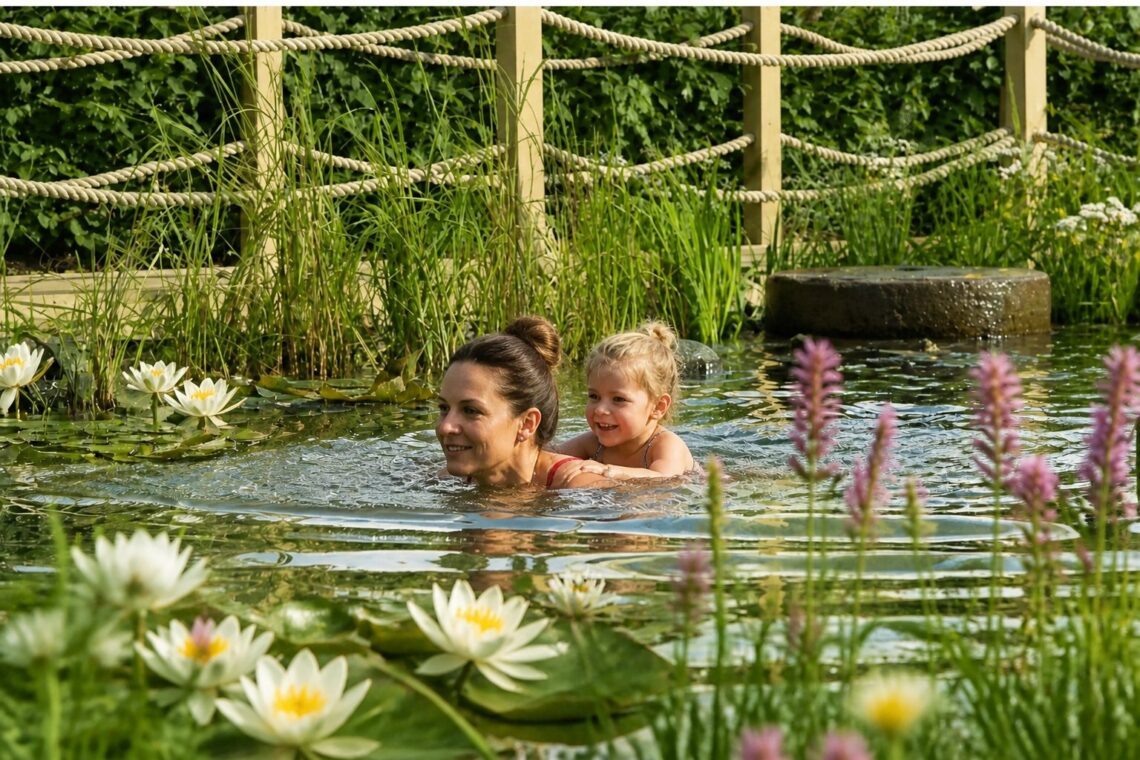
Most people underestimate this before they build one. A natural swimming pond doesn’t just add a feature to your garden, it changes how you use the whole space. Here’s what that tends to look like in practice:
- The garden feels larger. Because the pond sits within the landscape rather than on top of it, the whole space feels more connected and considered.
- It becomes the reason the family’s outside in summer. You’ll swim in it, sit beside it, and eat near it. Children engage with it in a way that a paddling pool or conventional swimming pool rarely sustains beyond a few weeks.
- It changes how guests experience your garden. A well-designed natural swimming pond is something people want to spend time near, not just glance at. That shifts how you use the space socially too.
- You’re enjoy nature more. Because it’s visually appealing year round, it draws you out in a way a conventional pool under a cover simply doesn’t. The garden becomes somewhere you actually engage with. The lifestyle shift isn’t dramatic. It’s gradual. But most people who own one say that’s the change they notice most.
One of our clients puts it simply: for him, the main benefit isn’t the swimming, it’s looking at it. The aesthetic presence of the pond, the way the light moves across the water, the wildlife it draws in, these are the things he comes back to most when describing what it’s actually like to own one. The swimming is almost secondary.
What Good Design Actually Delivers

Everything described in this blog depends on one thing: the pond being designed and built correctly from the start. It’s why Ponds by Michael Wheat approaches every project as a living system rather than a construction job.
A natural swimming pond isn’t a garden pond with a bigger surface area. It’s a living system, and it needs to be treated as such. The soil structure beneath it, the ratio of swimming zone to regeneration zone, the selection and placement of aquatic plants, the water flow through the filtration system, the biological filtration setup: all of it matters.
When it’s right, the water stays crystal clear, the ecosystem supports itself, and the maintenance genuinely is as light as it should be. When it isn’t, you’ll be managing problems that proper design would have prevented.
Why the Build Matters
The regeneration zone, where marginal plants and beneficial bacteria do the work of absorbing nutrients and keeping harmful bacteria in check, should occupy roughly half the pond’s total area. The swimming zone needs the right depth and water flow to stay clean. The planted zones need the right species in the right positions to contribute to filtration rather than compete with it.
This is why the build matters as much as the idea. A naturally filtered pond that performs well for decades starts with a team that understands how all of those elements work together.
Is a Natural Swimming Pond Right for Your Garden?
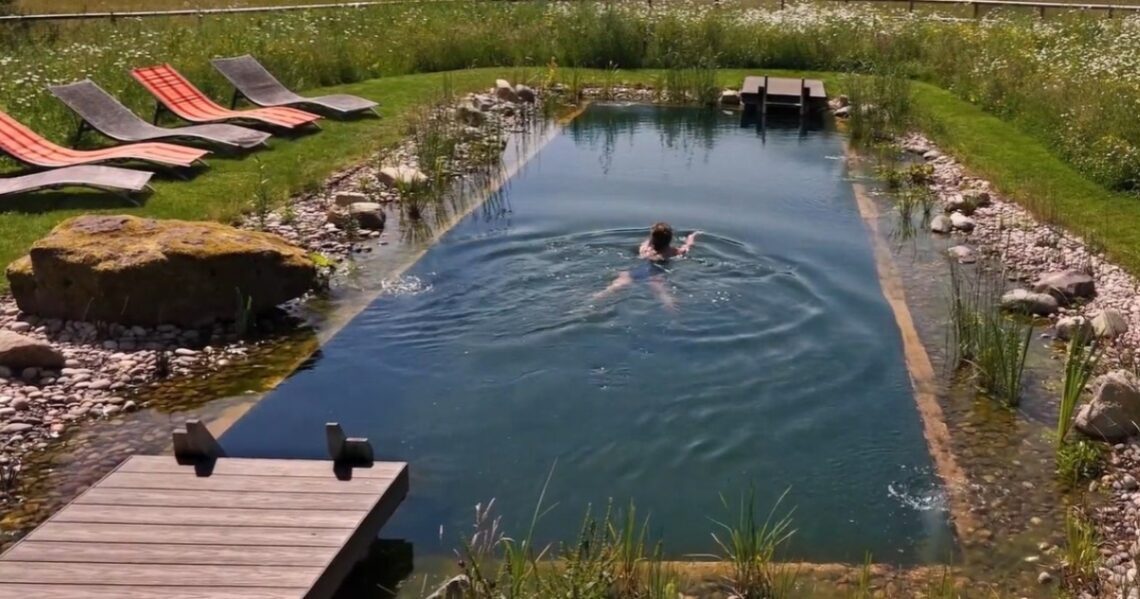
It suits those who want their garden to be genuinely usable, who value the feel of natural water over a chlorinated pool, and who are looking for something that will mature and improve over time rather than date and deteriorate.
It’s worth being honest about how it may not be the right fit for every garden or every homeowner. You’ll need enough space. A natural swimming pond needs room for both the swimming area and the regeneration zone to function properly. It’s also a significant investment, and one that’s worth approaching seriously rather than as an impulse decision.
However, even if you’re uncertain or very sure, the best next step is to see one in person. Our swim pond open days give you the chance to visit a finished pond in a real private garden, ask questions, and get a clear sense of whether it’s right for your home. You can also get in touch directly to start a conversation about your garden and what might be possible.
Frequently Asked Questions
Is a natural swimming pond lifestyle genuinely low maintenance?
Yes, but it depends on the quality of the design and build. A well-designed pond with the right ratio of planted zones to swimming area, the right species selection, and a properly sized filtration system will need relatively little day-to-day input. The seasonal rhythm of tasks is light compared to the chemical management a conventional pool requires. A poorly designed one will need significantly more attention. If you’d like to hear it from someone who’s lived with one, Jacqueline and Paul specifically chose a natural swimming pond because low maintenance was a priority for them.
Can a natural swimming pond be used by the whole family?
Yes, and for most families it becomes one of the most-used features of the garden. Children tend to engage with it more than a conventional pool, partly because it’s interesting beyond just the swimming. Safety considerations around depth and access are factored into the design from the start, and it’s worth discussing your specific situation with the team during the design process.
How does the water stay clear without chemicals?
Through a combination of biological filtration, beneficial bacteria, aquatic plants, and beneficial microorganisms working together in the regeneration zone. Aquatic plants absorb nutrients that would otherwise feed algae. Beneficial bacteria break down organic waste. The filtration system and water flow keep everything moving and in balance. When it’s all working correctly, the water clarity can exceed a metre, without a drop of chlorine. You can read more about how this works in practice on our Michael Wheat System page.
What’s the difference between a natural swimming pond and a conventional pool?
Beyond the obvious chemical-free water, the main difference is that a natural swimming pond is a living ecosystem rather than a treated body of water. It attracts wildlife, integrates into the garden landscape, and improves over time as the planting matures and the ecosystem establishes. A conventional pool is a structure that requires ongoing chemical management, covers or enclosures out of season, and offers little beyond the swimming itself. The running costs of a natural pond are also significantly lower over time. For a full breakdown of what to expect, see our swimming pond costs page.