Ever wondered what keeps a pond looking clear, fresh, and full of life? The answer is oxygen. It’s the fuel that keeps water clean, supports plants and wildlife, and stops your pond from slipping into a murky mess.
While plants, waterfalls, and smart design can all help support oxygen levels, they won’t keep your water clear and healthy on their own. To achieve a clean, balanced pond, you need a pump and filtration system doing the heavy lifting in the background.
That said, there are natural ways to support your pump and give your pond an oxygen boost. In this guide, we’ll explain why oxygen matters so much, why pumps are essential, and the simple steps you can take to keep your pond fresh, clear, and full of life all year round.
Why Oxygen Is So Important in Ponds
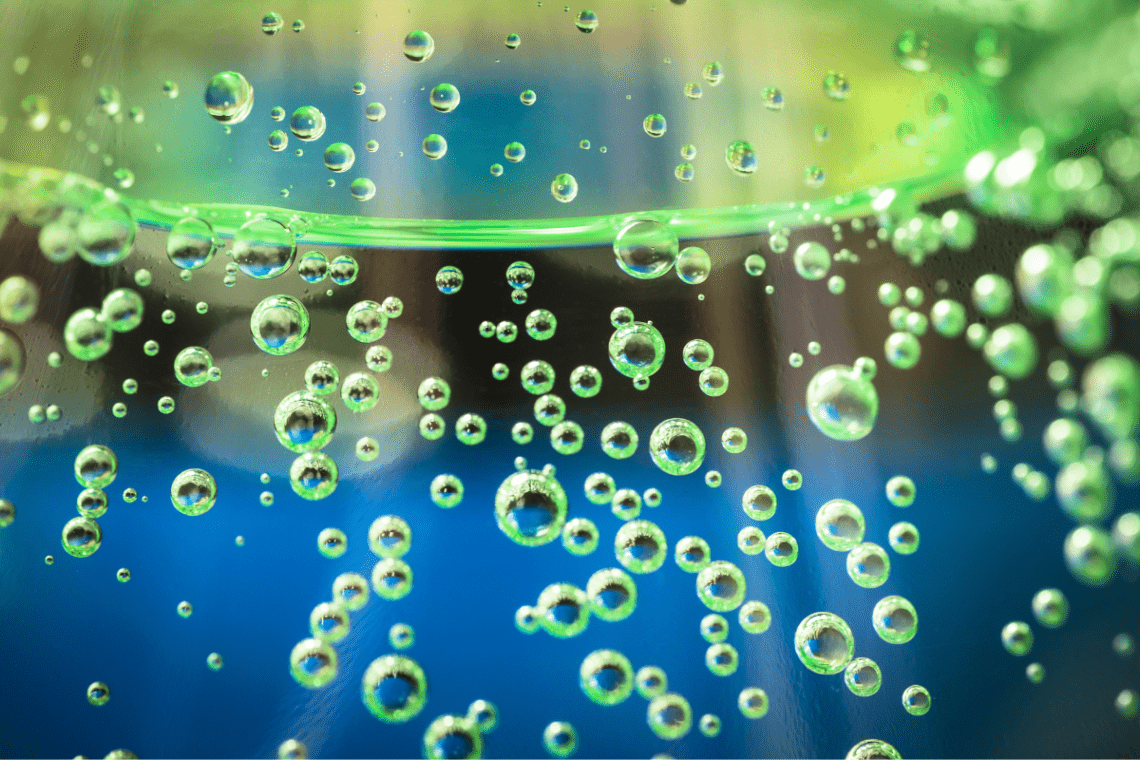
Imagine your pond as a living, breathing space. Every creature, from frogs to microscopic bacteria, depends on dissolved oxygen in the water to stay alive and keep the ecosystem balanced.
Here’s what happens when oxygen runs low:
- Sludge builds up
- Algae starts to bloom and take over
- Water turns murky and smells… not great
- Fish and wildlife struggle
- That clean, refreshing swim? Gone.
Low oxygen can also throw off the balance of carbon dioxide, which makes life harder for anything still hanging on. Noticing these signs? It’s worth testing your pond water to check what’s going on below the surface.
Why Pumps Are Essential for Oxygenating a Pond
At Ponds by Michael Wheat, we’ve been asked if it’s possible to oxygenate a pond without a pump. The simple answer is: no.
While plants and clever design can support oxygen levels, they can’t deliver the consistent flow and dissolved oxygen needed to keep pond water crystal clear and healthy on their own.
This is why we always install pumps in our ponds. Pumps keep the water moving, increase oxygen exchange, and prevent stagnation, creating the conditions needed for clear water, thriving plants, and balanced ecosystems. Without this, oxygen levels drop, sludge builds up, and water quickly becomes cloudy and unpleasant.
Check out our guide, Do Ponds Need Pumps?, to find out more.
6 Ways to Support Your Pump and Boost Oxygen Naturally
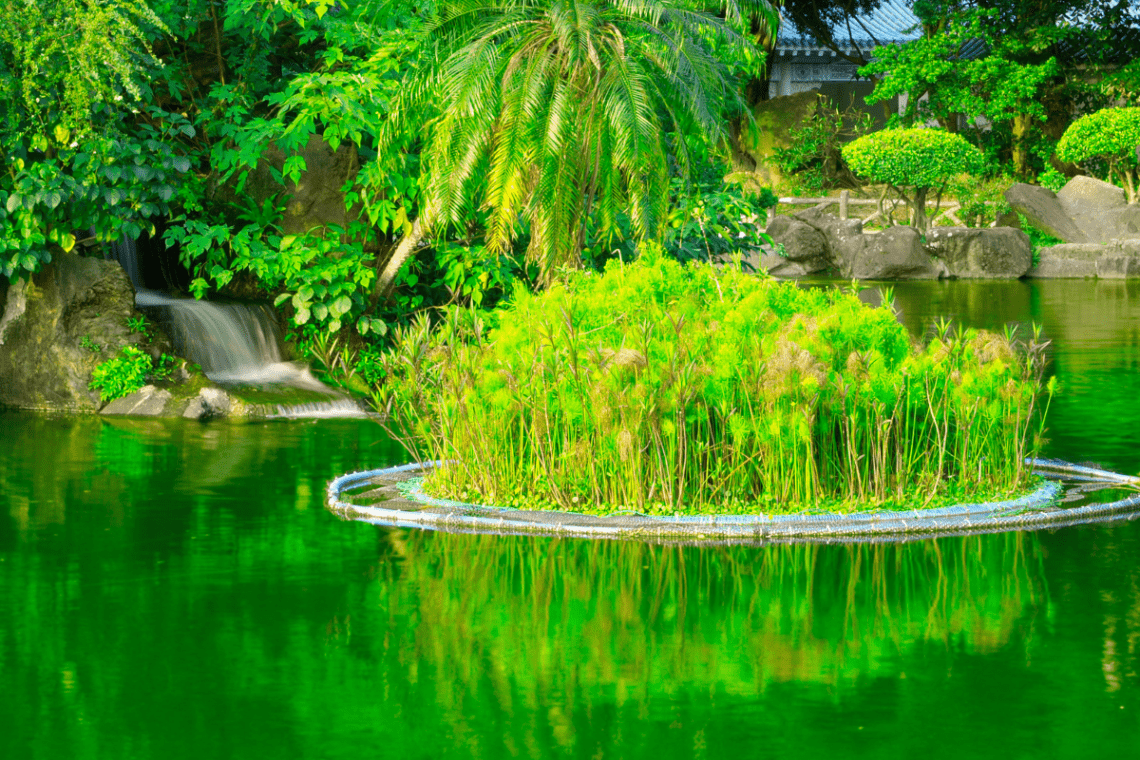
Your pump and filtration system are the core of a healthy pond, but there are natural ways to give them extra support. With the right plants, smart design, and simple maintenance, you can boost oxygen levels and keep your water clearer for longer. These steps won’t replace a pump, but they will help it run more efficiently and keep your pond thriving all year round.
1. Pond Plants Can Help (But Filtration Does the Heavy Lifting)
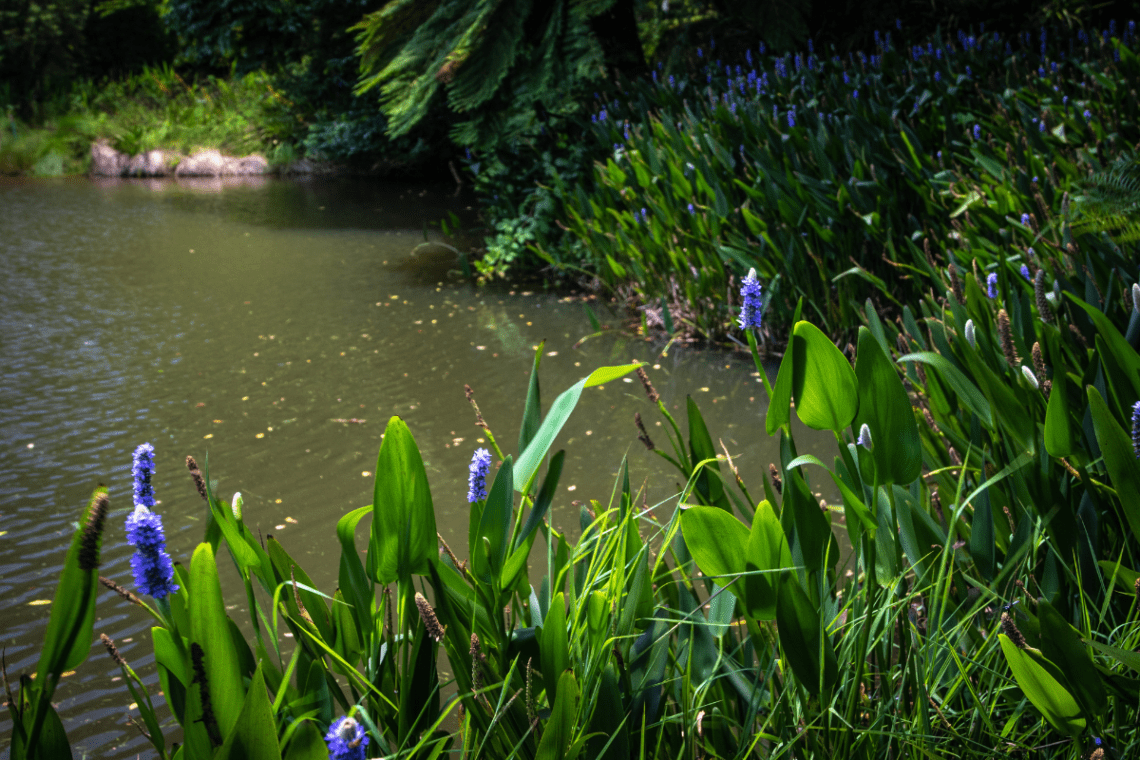
Pond plants are brilliant for creating a natural look and supporting wildlife, but they can’t keep your pond healthy on their own. During the day, plants like Hornwort and Canadian Pondweed release oxygen, and they also absorb some of the nutrients that algae would otherwise feed on.
However, relying on plants alone isn’t enough. At Ponds by Michael Wheat, we always install a filtration system to do the real heavy lifting. This ensures consistent oxygen levels, crystal-clear water, and a balanced pond ecosystem. Plants add beauty and support, but it’s the filtration that makes sure everything stays healthy long-term.
Best oxygenating plants for swimming ponds:
- Hornwort: Fast-growing and free-floating
- Water Crowfoot: Delicate and ideal for UK waters
- Canadian Pondweed: Reliable and low-maintenance
Bonus Tip: Marginal plants like Water Mint and Yellow Flag Iris may not oxygenate the water directly, but they help filter it and support local wildlife.
2. Design for Natural Flow
A bit of smart design goes a long way, and that’s where pond experts come in.
By shaping your pond with gentle slopes and using gravity to their advantage, experts can create a natural flow that refreshes and reoxygenates the water.
Increased surface area from water movement improves oxygen exchange, making it easier for oxygen to dissolve into the pond. This creates circulation, boosts oxygen, and helps prevent the dreaded stagnant zones.
3. Add a Stream or Waterfall
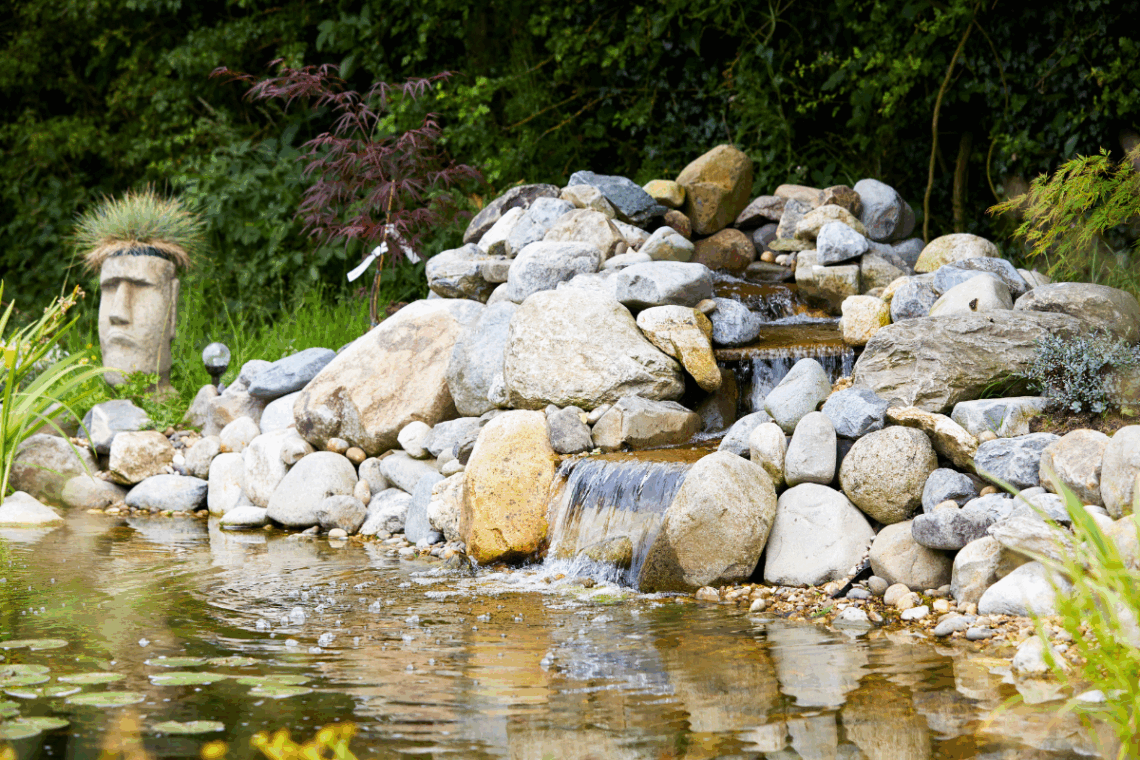
A stream or waterfall is a great way to bring movement, sound, and beauty to your pond. Moving water also helps with oxygen exchange at the surface, giving your system a little boost.
But here’s the key: these features are enhancements, not the foundation. To achieve high-end results, you need a reliable pump and filtration system running in the background. A waterfall or stream works best when it’s part of a properly designed system, complementing the filtration rather than replacing it.
Learn more about how waterfalls and aeration in ponds help maintain balance and oxygen levels with our blog post, Waterfalls and Aeration in Ponds: The Ultimate Guide.
4. Keep Surface Debris Under Control
Keeping the pond’s surface clear of debris is really important to prevent oxygen depletion. Regular maintenance is necessary to keep the pond clean and support healthy oxygen levels.
Still water covered in leaves, algae, or duckweed blocks sunlight – which plants need to photosynthesise and release oxygen. By regularly removing debris from the pond’s surface, you help maintain oxygen levels and support healthy aquatic life.
Try these tips:
- Use a fine mesh skimmer net daily during autumn
- Install a surface skimmer
- Trim dead plant matter around the edges
Natural doesn’t mean no pond maintenance – it means smarter maintenance.
5. Build a Balanced Ecosystem
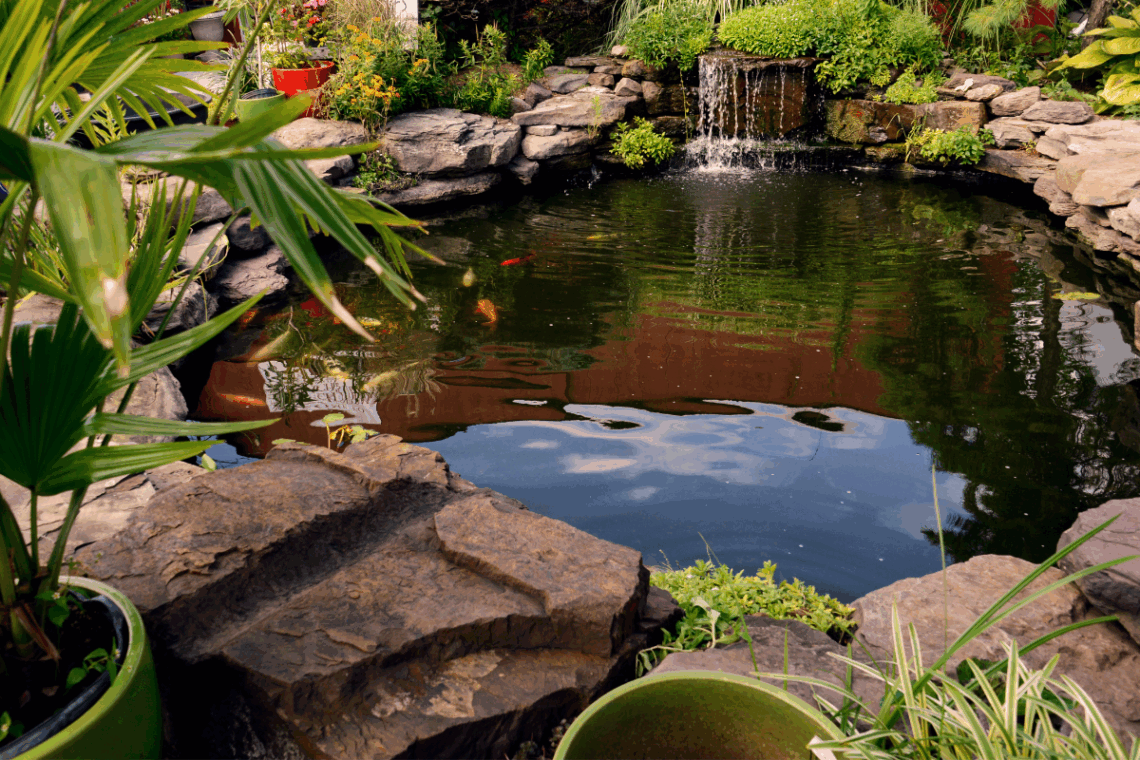
The healthiest ponds are those that work in balance. With the right mix of plants, microbes, and — most importantly — a well-designed filtration system, your pond can regulate itself and stay clear without constant intervention.
At Ponds by Michael Wheat, we’ve developed the Michael Wheat System, which is designed to keep water crystal clear, oxygen levels stable, and the ecosystem thriving. It combines clever filtration with natural planting zones to create an environment that looks beautiful and works with nature rather than against it. This balance reduces common problems like algae blooms and murky water, while making the pond easier to maintain long term.
6. Keep Fish Numbers Low (or Skip Them)
Fish add charm and life to a pond, but they also increase the demand on your system. Fish waste produces nitrates, and the more fish you keep, the harder your filtration system has to work to maintain balance in fish ponds.
Too many fish can tip the scales quickly, leading to murky water and stressed wildlife. That’s why we recommend keeping fish numbers low or leaving them out entirely. This way, your filtration system can focus on keeping the water clear and safe for swimming, rather than constantly battling excess waste.
If you’re building a swimming pond, we recommend leaving fish out altogether. This leaves more oxygen for the plants and microbes to create a healthy swimming environment.
Ready to Breathe New Life Into Your Pond?
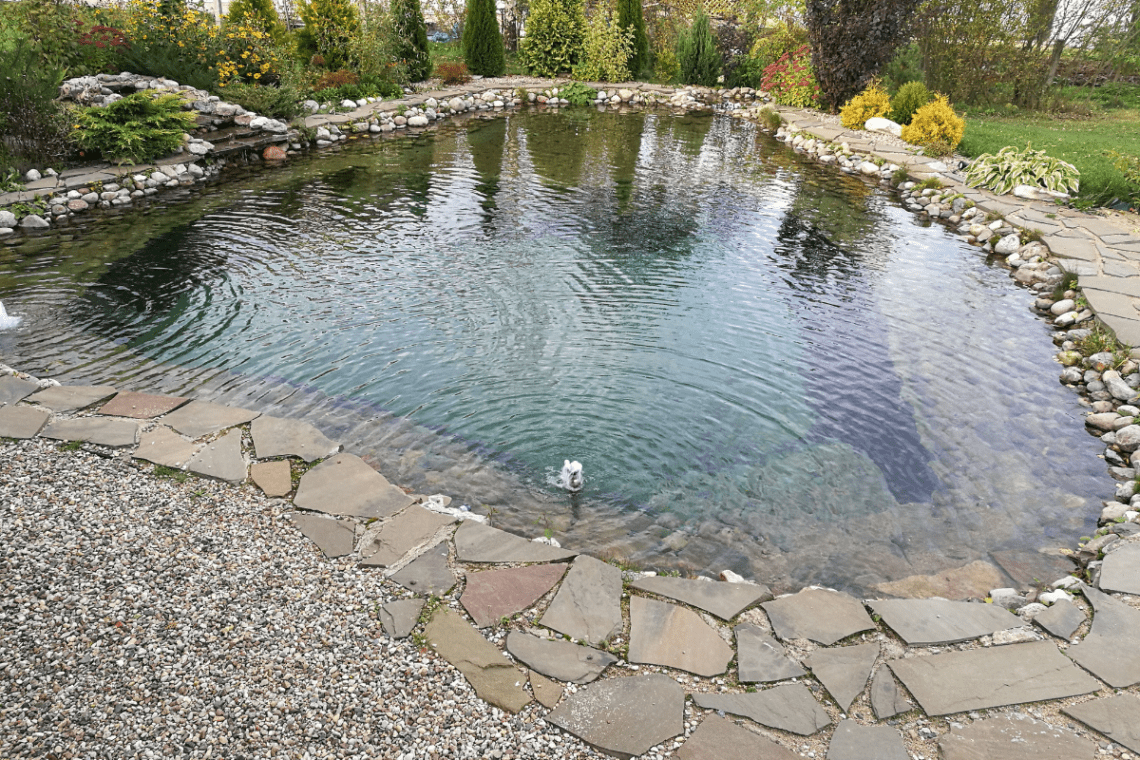
Oxygen is what keeps a pond clear, fresh, and full of life. While plants and natural features can support the process, the real key is a well-designed pump and filtration system working in the background.
At Ponds by Michael Wheat, we design and build ponds that work in harmony with nature, so you can enjoy clear, fresh water with less stress and easier maintenance.
Whether you’re starting a brand-new project or looking to upgrade an existing pond, our team can help you create something beautiful, sustainable, and made to last.
Get in touch to chat about your pond ideas or download our FREE Pond Inspiration Guide!